
Osamu Makiya × AMAHARE SHIROKANEDAI
"More Primitive"

We are pleased to announce an exhibition by ceramic artist Osamu Makiya, who works out of Nanjo, Okinawa, at AMAHARE SHIROKANEDAI.
The theme for this exhibition, his first with us in four years, is "More Primitive."
Reevaluating his clay and glazes from scratch, Makiya-san has created exactly what he desires to make at this moment in time.
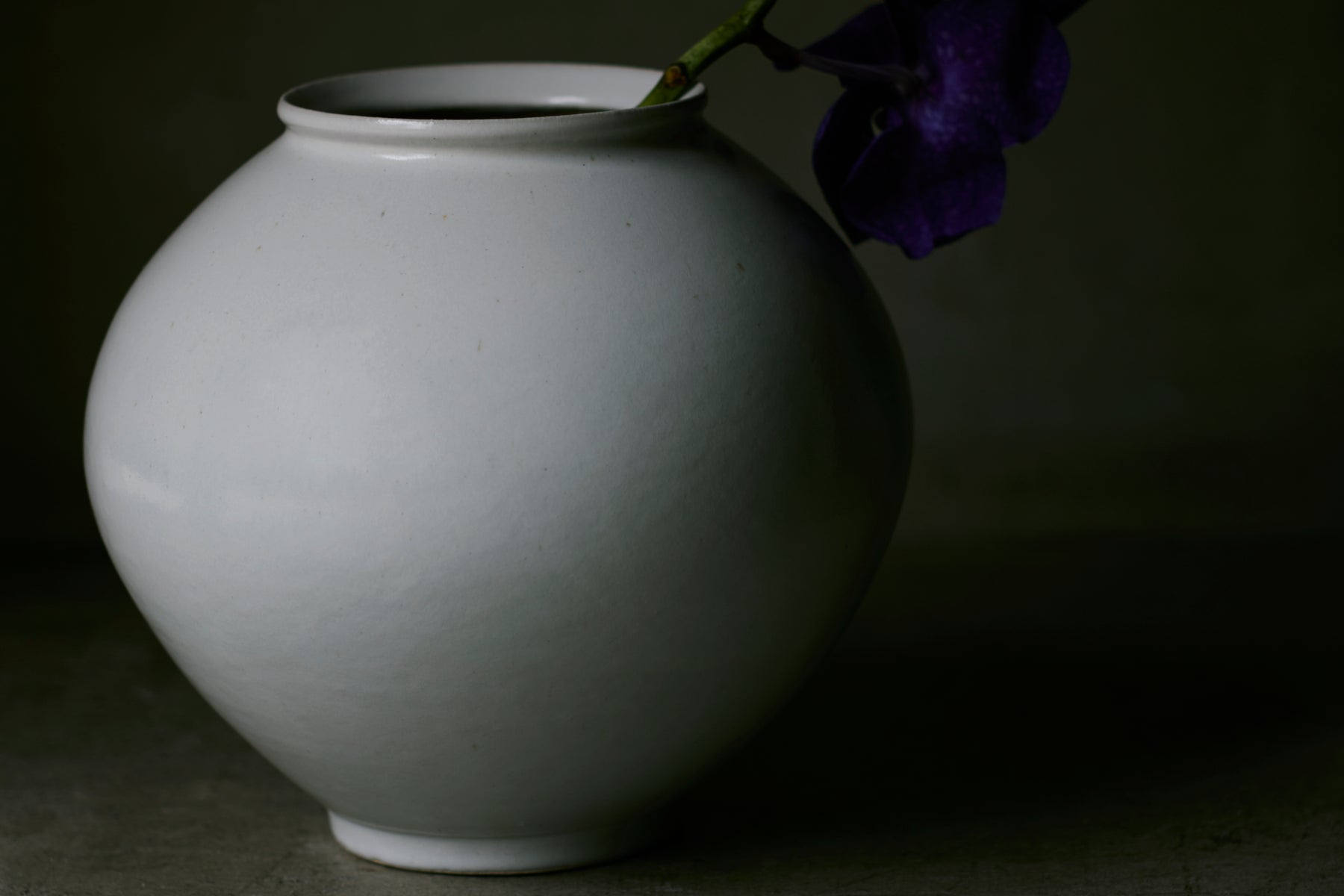
The rich, deep white of the sugarcane glaze (kibi-yu), born from sugarcane ash.
The pine ash glaze (matsubai-yu), made using ash from the climbing kiln he inherited during his apprenticeship in Yomitan.
The banyan ash glaze (gajumaru-hai-yu), showcasing the beautiful, uncontrollable flow of the glaze.
We are captivated by his approach of intentionally omitting decoration to pursue the inherent beauty of the materials themselves.
Please look forward to the refined presence that emerges from beyond the "primitive."
We sincerely look forward to welcoming you.
◇ Exhibition Period
AMAHARE SHIROKANEDAI
Friday, July 17 - Monday, July 27, 2026 *Closed on Wednesdays
Online Exhibition https://shop.amahare.jp/
Friday, July 31, 2026, 18:00 - Sunday, August 2
*The special exhibition page will be available to view from 18:00 on Friday, July 31.
◇ Artist Appearance Schedule
Friday, July 17
◇ Location
AMAHARE SHIROKANEDAI @amahare_shirokanedai
5-5-2 Shirokanedai, Minato-ku, Tokyo
03-3280-0766
info@amahare.jp
◇ Reservations
No reservations are required for this exhibition. Please feel free to visit us at your convenience.
Photo / Eri Masuda @massu_90
Styling / Megu Okazaki (AMAHARE)
Text / Kenichi Kaneko (AMAHARE) @amahare_kaneko

Quiet Pieces
13 years ago.
Makiya-san moved from Shuri to Nanjo in search of a quiet environment where he could devote himself entirely to pottery.
The land, previously used by a farmer, is surrounded by sugarcane fields and features a small house with traditional red roof tiles—a place where the original, untouched landscape of Okinawa unfolds.
We have just received the new works from him for this, his third exhibition at AMAHARE SHIROKANEDAI.
They possess a clay texture unlike anything before, and a presence that is both rugged and quiet.
Over these past 13 years, Makiya-san has remained unchanged, spending his days busily at work.
The thought that he may have finally arrived at the "quiet pieces" he had been seeking left me deeply moved.

Pine Ash
Makiya-san’s signature pieces are widely known to be his lively blue-and-white vessels painted in vibrant cobalt.
In this exhibition, he challenges a new form of expression by combining new glazes—such as pine ash glaze, sugarcane glaze, and banyan ash glaze—with
clay blended from the raw earth of Yanbaru (northern Okinawa).
The soft green of the clay teapot (dobin) is expressed using pine ash.
This glaze is formulated from pine ash gathered from the climbing kiln
he continually fired during his apprenticeship days.
Hearing that Makiya-san newly mixed this highly memorable—and in Okinawa, quite precious—pine ash specifically for this exhibition
naturally deepens our emotional connection to the pieces.

Sugarcane Glaze
Last year, I visited Makiya-san’s studio for the first time in a while.
Spotting the red-tiled house just beyond the sugarcane fields always makes my heart skip a beat.
As always, he and his wife welcomed me with warm smiles.
While enjoying some cold tea and looking around, a white jar placed in the corner of the gallery caught my eye.
When I asked him about it, he replied:
"That piece has been sitting there for a long time. It’s a white jar made with a sugarcane glaze right after I became independent. I just can't seem to reproduce that exact white right now..."
Deeply regretting my own lack of observation for not noticing it despite my many previous visits,
I was so drawn to that beautiful "white" that I had to ask:
"Would you be willing to show this piece in the exhibition?"
While he said it would be difficult to exhibit that specific piece due to a small crack, I received the joyful reply that he would challenge himself with the sugarcane glaze once again.
The emotion I felt when those new pieces arrived was simply indescribable.
These white jars are primitive, yet quiet and modern.
I truly hope everyone gets a chance to see them.

More Primitive
The theme of this exhibition, "More Primitive," was inspired by this very piece.
A modern presence visible beyond the coarseness of the clay.
The shape is the "Morning Glory Bowl" (Asagao-bachi), a form Makiya-san has been making since his early days of independence.
I was told he evolved the shape to suit the new materials.
Okinawan pottery, which developed within the unique cultural sphere of Ryukyu,
has established a solid core while absorbing influences from various countries.
While what constitutes "Okinawan style" varies from person to person, I am deeply drawn to the beautiful presence that lies beyond his roots—something that only Makiya-san, born and raised in Okinawa, can express.
What he has created lies beyond the "primitive."
Please look forward to experiencing it.